
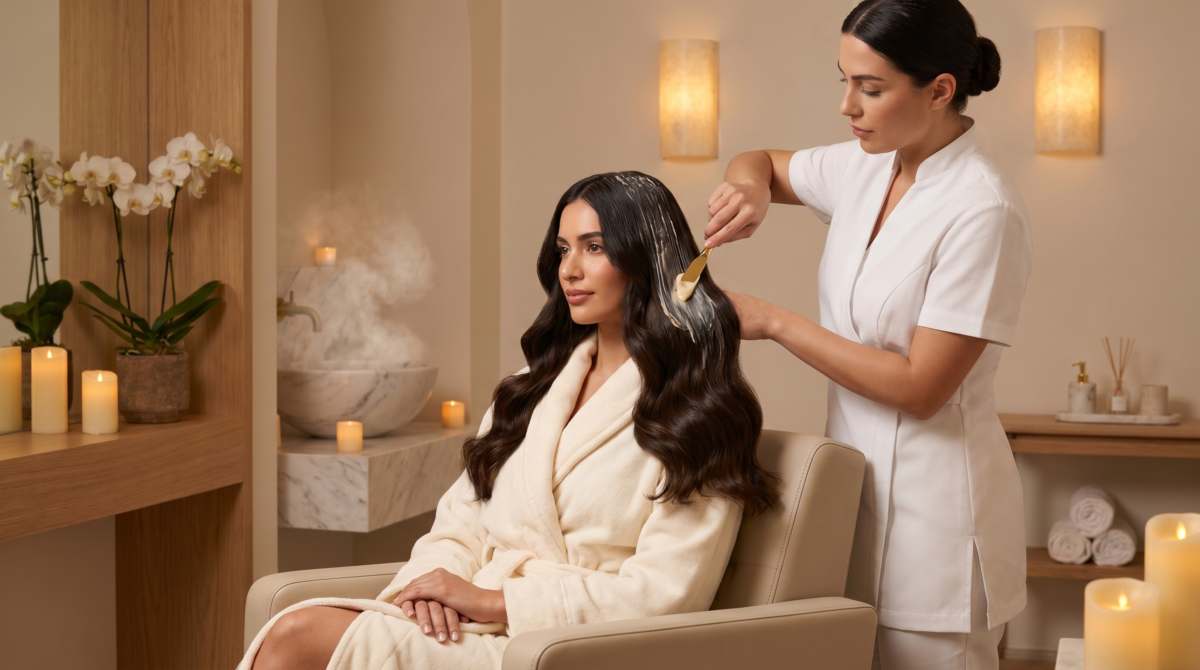
If your hair has felt drier, more brittle, or harder to manage over the past few months, you’re not imagining it. Winter does real damage to hair — and in Lake St. Louis, where temperatures swing dramatically and indoor heating runs constantly, the cumulative dryness can get serious by February. Here’s what deep conditioning actually does and why now is the right time to book a treatment.
What Winter Does to Your Hair
Low outdoor humidity pulls moisture out of the hair shaft. Indoor heating does the same thing from the inside. The result is a moisture deficit that builds over weeks — starting as frizz and dullness, then progressing to brittleness and breakage if left unaddressed.
Color-treated hair is especially vulnerable. The lightening and toning processes that create beautiful color results also slightly alter the hair’s porosity, making it more susceptible to moisture loss in cold, dry conditions.
What Deep Conditioning Actually Does
A standard conditioner works at the surface of the hair cuticle. It smooths and detangles, but doesn’t penetrate deeply. Deep conditioning treatments contain ingredients designed to penetrate past the cuticle and replenish moisture and proteins within the hair cortex itself.
The result is elasticity. Hair that can stretch slightly without breaking rather than snapping under tension. That elasticity is what protects against breakage during combing, heat styling, and regular wear.
Professional vs. At-Home Treatments
At-home conditioning masks from brands like Olaplex are a solid weekly maintenance option. But professional-grade service enhancements — applied during your salon visit — use higher-concentration formulas that penetrate more deeply and deliver more dramatic results than anything available retail.
We typically recommend pairing a deep conditioning treatment with your regular haircut appointment in winter. The trim removes compromised ends, and the treatment restores the health of the remaining hair.
Signs You’re Overdue for a Treatment
- Hair snaps when combing rather than stretching slightly
- Significant frizz in low-humidity conditions indoors
- Dullness that persists even after washing and styling
- More than average hair in your brush or shower drain
- Color that looks faded or flat before it should
How Often Should You Deep Condition?
As a baseline: once a week at home with a quality mask, and once a month with a professional treatment. If your hair is significantly damaged or you’re in the middle of a color transformation, more frequent professional treatments may be warranted. Your stylist can assess during your visit and give you a specific recommendation.
The Professional Beauty Association consistently ranks moisture management as one of the top client concerns in colder-climate markets — which tells you this is a genuine, widespread issue and not just seasonal marketing.
Don’t Wait Until Spring
The most effective time to address winter dryness is during winter, not after. By the time you’re noticing significant breakage, you’re already behind. A treatment now protects the hair you have and sets you up for a strong spring when color season kicks back into gear.
Book a service enhancement at Inspire Salon and let’s get your hair back to where it needs to be.